It was a bit of a scorcher this past weekend; up to the low 90’s. I have a simple test for determining whether or not summer is here: if at any time my steering wheels burns me, it’s summer. I took full advantage of the great weather with a good deal of climbing and running. Man, I love Spring and Summer.

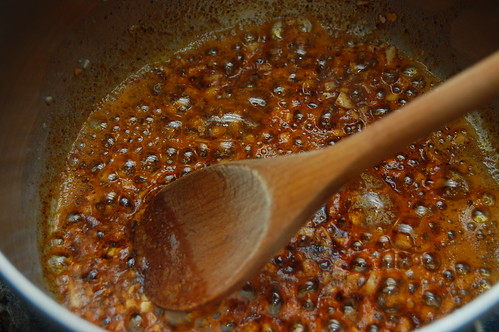
Saute the Spices

As I mentioned earlier, a change in season means a change in diet. Salads, cold sandwiches, etc. Something too cool you off is a plus, and not heating the home from your kitchen is just gravy. However, sometimes we just want what we want; screw the season.

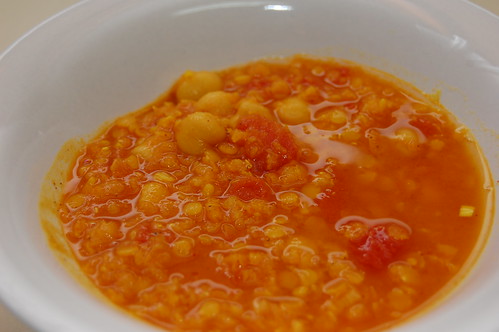
I’m not that skilled in cooking indian style, but I’m a fan of this soup (the ease in preparing helps). The lentils and chickpeas mix well with the tomato and spices. The cayenne and red pepper flakes give it a bit of a kick, so feel free to temper with lemon juice if so inclined.

Spicy Tomato Soup with Red Lentils and Chickpeas

Spicy Tomato Soup with Red Lentils and Chickpeas

2 tablespoons butter
2 cloves garlic; minced
1/2 teaspoon ground cumin
1/2 teaspoon chili powder
1/2 teaspoon cayenne pepper
pinch red pepper flakes
1 14.5oz can diced tomatoes
3 cups vegetable stock
1 cup dried red lentils; rinsed and drained
1 cup cooked chickpeas (half a can); rinsed and drained
1 tablespoon sugar
1/2 teaspoon turmeric
1/2 teaspoon salt or more to taste

Bring a medium-sized pot to medium heat and add butter, garlic, cumin, chili powder, cayenne pepper and red pepper flakes. Saute for 1 minute. Add the remaining ingredients and bring to a boil. Simmer for 20 minutes. Enjoy.

Well, I wasn’t entirely sure about posting this recipe since Edwin had just posted an asparagus and pasta dish earlier in the week, but then I thought, “DinnerCakes face-off?”
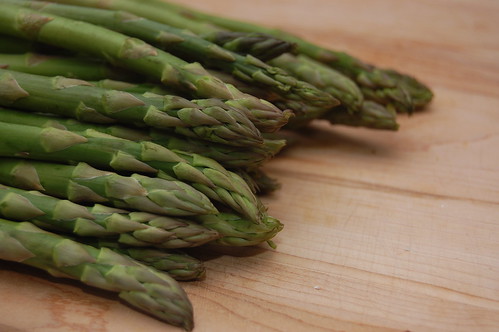
asparagus

Of course I didn’t consult Edwin about this, so perhaps later today we’ll have a DinnerCakes rumble. Maybe all the Ghost Baker recipes will suddenly disappear! Maybe my photo over in the right sidebar will be replaced with a Lolcat! Actually the Lolcat thing would be sort of awesome.
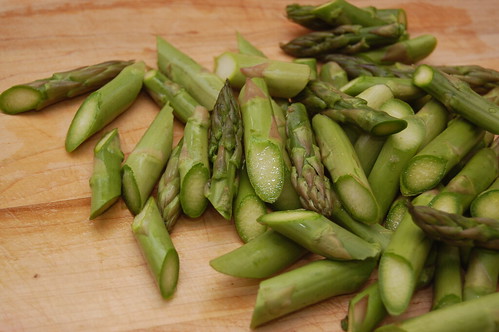
cut asparagus

In any event, a few short weeks ago my good friend’s boyfriend was in town on business. My husband and I went to dinner with him and his co-worker at Clyde’s in Georgetown. The wait was a lot longer than what they originally said and the food didn’t knock our socks off, but I liked the idea behind my dish – I ordered mini ravioli with spinach and asparagus.
peascream sauce

As you know, I have to take any opportunity that tricks me into eating more vegetables than I normally might, so I decided to adapt this dish at home. In addition to spinach and asparagus, I also threw in some peas. The ravioli has just enough cheese so that I’m slightly less aware of the massive amount of veggies present. I also found that I could get away with using only the tiniest amount of cream sauce, just enough to keep the ravioli moist and the veggies flavorful.
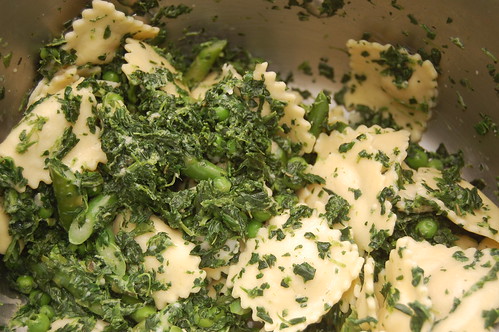
combined

I really enjoyed this! I’ve had instances in the past where asparagus doesn’t cook quite right, but for this dish I decided to steam them and they were perfect! The cream sauce is really barely noticeable; this is not one of those dishes you get at a restaurant where you have to wade through the sauce to find noodles. *If you’re not a big fan of garlic you may want to use one clove instead of two, as the sauce does have a more noticeable garlic flavor (which I like).

Ravioli with Asparagus, Spinach and Peas

I’d have to say that any dinner that results in me happily eating THREE different kinds of vegetables is a success! It also received the seal of approval from my husband.
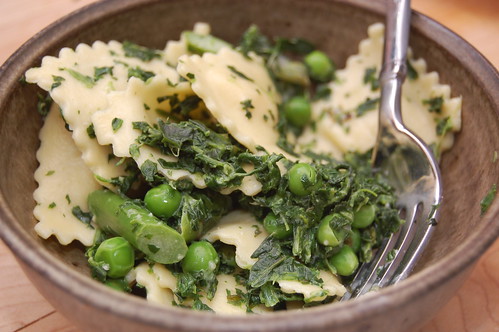
Ravioli with Asparagus, Spinach and Peas

Ravioli with Asparagus, Spinach and Peas

1 package of light four cheese ravioli (9 oz.)
13 asparagus, cut diagonally into 1 inch pieces
3/4 cup frozen peas
1 package frozen chopped spinach (10 oz.)
2 cloves garlic*
1/4 cup cream
salt and pepper, to taste
dash onion powder
dash marjoram
1 teaspoon parsley flakes
1 tablespoon shredded parmesan cheese

This dish isn’t time consuming, but it does take a little maneuvering to cook each item separately. You may want to frequently check your vegetables while they’re cooking to make sure you get your desired consistency.

Cook spinach according to package instructions. While spinach is cooking, slice your asparagus and get your other ingredients ready. When spinach is done, drain and set aside. Boil ravioli according to package instructions; steam cut asparagus in a colander (covered) while pasta cooks.

While pasta is cooking, combine cream, garlic, salt and pepper, onion powder, marjoram, parsley flakes and shredded parmesan in a small sauce pan. Stir frequently to prevent a film from forming over the cream sauce. The peas should only take a short amount of time to cook – so start peas when pasta is about halfway cooked. When the peas are done, combine them with the spinach. The asparagus will likely finish steaming just a minute or two before the pasta is done. When done, remove asparagus from colander and combine with spinach and peas.

Drain ravioli when cooked. Return to pot and toss with a glug of extra virgin olive oil. Gently add in the spinach, asparagus and peas, then pour hot cream sauce over pasta and vegetables. Toss just once or twice to incorporate the cream sauce.

This recipe yields enough for two people to have seconds.

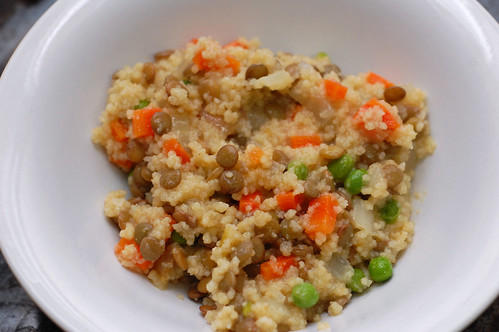
Ever since I’ve learned the glory that is couscous, I’ve been trying to find ways to incorporate it into my meals. One of the ways I’ve been looking into is as a replacement (or complement) to rice; giving an old favorite a twist. That’s how I came up with today’s recipe.

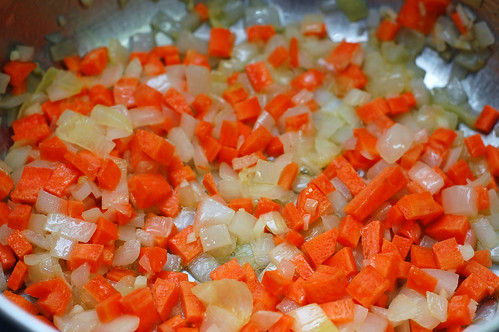
Onion, Garlic, Carrots and Butter

When I was in high school I worked at the local Arbys restaurant. It was close enough to walk (no car) and far less disgusting than the nearby McDonalds (which was quite disgusting). Oh, and we had a frozen custard station which was friggin’ awesome. One of the side dishes we sold with our rotisserie chicken was rice pilaf which was, for an uncultured high-schooler, quite tasty. It had small bits of vegetables and almond slivers. I decided to use this as my inspiration.

The Makings of a Pilaf

Pilaf is a dish in which rice is lighty sauted in butter or oil and often well-seasoned. I decided to go mild on the seasoning; relying instead on a high quality stock. This recipe can be easily modified per your seasoning or vegetable preferences, but I suggest giving it a shot as a complement to your main course.

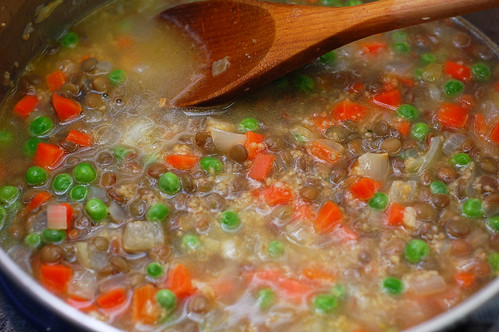
Couscous and lentil pilaf

Couscous and Lentil Pilaf
Without a high quality stock to enhance the flavor, this dish will be very mild in taste. Consider spice alternatives.
2 tablespoons butter
1 small oinion; diced
1 clove garlic; minced
1 carrot; diced
1/2 cup green lentils
1/2 cup couscous
1 cup peas (if frozen, thawed)
1/4 teaspoon salt
1/4 teaspoon cumin
4 cups high quality stock
1/4 cup almond slivers

Bring the lentils to a boil in 1 1/2 cup of water and simmer for 12 minutes. Strain and set aside. While the lentils are cooking, lightly toast your almond slivers.

Melt the butter under medium-low heat and sweat the onion, garlic and carrots for 10 minutes; stirring occasionally. Add the lentils, couscous, peas, salt, cumin and stock and bring to a boil under medium-high heat. Reduce to low and cover, letting it simmer for 10 minutes. Turn off heat and leave on the burner uncovered until light and fluffy; approximately five minutes. Add your almonds and any additional salt to taste. Enjoy.

I started a new project at work this week and the change of pace has really been nice. In an attempt to hit the ground running and ramp up quickly I’ve been spending extra hours at the client site; which unfortunately leaves me a bit drained in the evenings. I’ve been without soup for lunch for far too long! Time to change that and introduce a new ingredient: wild rice.

Wild Rice

Wild rice is a great change from your classic white or brown you’re probably more use to cooking with. Not only is it great for you (great source of protein, lysine and dietary fiber. also low in fat), but it’s got a great earthy nutty flavor to it. It’s hard to describe; it tastes “thick.” When cooked the rice “blossoms,” as the inside breaks out of its darker skin. Because of its thickness, it can take longer to cook (45+ minutes) and takes more water (four cups of water to one cup of rice).

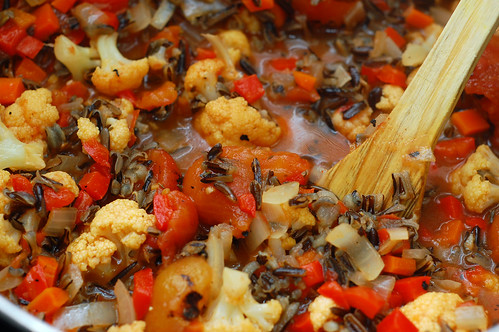
Mixture of Vegetables

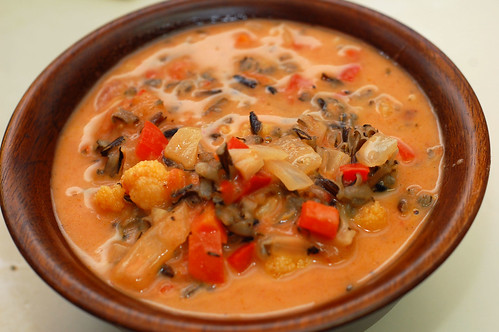
I wanted something that that said “comfort food;” a label I don’t often give to the healthier soups. At the same time I wanted to preserve the wild rice’s presence instead of it serving as a filler. I decided on it’s major accompaniment to be red bell pepper and fire roasted tomatoes and was very pleased with the result. The moderate use heavy cream keeps it relatively healthy while making it indulgent. I’ve had to use sheer force of will to save it for lunch. The only thing I’d change is possibly adding another pepper. Either way, this earns a spot on my favorite soup list. Let us know what you think!

Creamy Red Bell Pepper Soup with Wild Rice

Creamy Red Bell Pepper Soup with Wild Rice
3 tablespoons oil
1 cup uncooked wild rice; rinsed and drained
1 yellow onion; diced
1 red bell pepper; diced
3 garlic cloves; minced
1 large carrot; diced
1 28oz can diced tomatoes
3 cups vegetable stock
8oz cauliflower; chopped into small florets
1/2 teaspoon paprika
1 teaspoon parsley
1/2 teaspoon thyme
1/2 to 1 cup combination of heavy cream and stock

Cook the rice per the package’s instructions; probably in four cups of lightly salted water for 45 minutes. Rice should be chewy but not crunchy. Remember we’ll be cooking it longer with the rest of the ingredients.

In a large pot, sweat the onion, bell pepper, garlic cloves and carrot in oil for 10 minutes. Add the can of tomatoes along with the rice, cauliflower, stock and spices. Simmer for 30 minutes allowing everything to mingle well. Add salt and pepper to taste. Remove from heat.

Now here’s where your tastes come in. You have two questions: how creamy and how thick? Start with at least 1/4 cup heavy cream and taste. If you want thick and lightly creamy, you’re done. If you want creamier, add more cream. If you want less thick add more stock. Either way, mix together and enjoy.

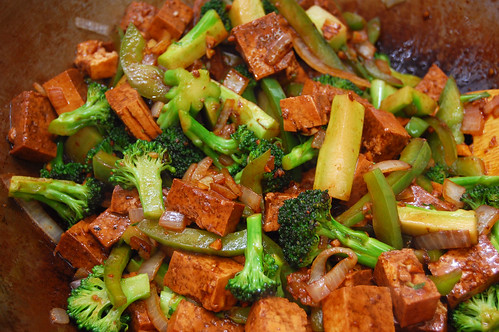
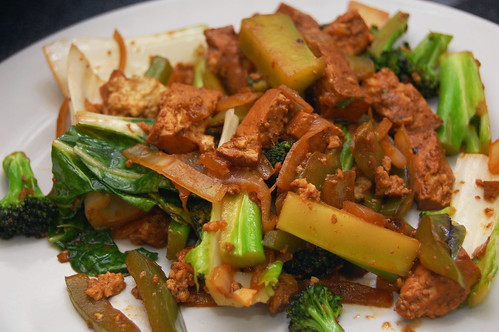
A friend of mine recently requested more tofu recipes and since I become giddy as a school girl when I receive requests, I decided to accommodate immediately. I also had an extremely late Saturday night and there’s something about the oily feel of some stir fries that just felt so right on Sunday.

Tofu with Broccoli

On the rare times I cook with tofu it’s often in stir-fries. It’s easy to add and since tofu doesn’t really have much of a flavor on its own; the multitude of ingredients has the potential to make a real impact on the stuff. One of the key things to note about tofu is you often want to marinate it prior to cooking; ensuring that whatever flavor you’re shooting for really “sticks” with it. Of course there’s no universal time to go by, but 30 minutes is a good guideline.

Tofu Stir-Fry with Broccoli and Bok Choy

Got any good tofu recipes? Send em along!

Tofu Stir-Fry with Broccoli and Bok Choy
1 1/4 pound firm tofu
3 tablespoon sesame oil
2 tablespoon dark soy sauce
2 tablespoon chili oil
1 tablespoon ginger; minced
2 garlic cloves; minced
1 teaspoon agave nectar
1/4 teaspoon salt

3 tablespoons peanut oil
1 large yellow onion; chopped
1 green bell pepper; sliced
10oz broccoli; chopped into roughly equal sizes (cut large florets in half)
1 head bok choy; chopped

Cut the tofu into 3/4 inch pieces (roughly) and a wide container; preferably tupperware. Mix the oils, soy sauce, ginger, garlic, agave and salt and coat your tofu with it. The bottom layer should be partially covered. Marinate for fifteen minutes then rotate the tofu so the top layer is marinating. If using tupperware, simply lid and turn upside-down. Marinate for another fifteen minutes.

Heat your wok to high and add your oil. Swish around and add your onion and bell pepper; stir-frying for approximately 3-4 minutes or until onions become translucent. Add the broccoli and stir-fry for another 3-4 minutes until broccoli begins to soften slightly. Add your tofu with marinade and continue cooking for five minutes; until tofu is hot. Add your bok choy and (yet again) stir fry until leaves begin to wilt. Serve immediately and enjoy.

SusanV of Fatfree Vegan Kitchen posted a dish that looked pretty rockin’ the other day: No-Queso Quesadillas. I really love some of the recipes she writes, they were pivotal when I was making the move away from meat, but I don’t think I’ve ever made something of hers that I’d call comfort food. This, however, had potential.

No-Queso Queso

I think I’ve mentioned before that the lady friend gave me Fresh Food Fast, a book that’s yielded me pleasant results thus far. Inspired by one of its recipes, I decided to take a shot at souping up SusanV’s recipe and make it a true comfort food.

Preparing Our Quesadillas

The non-queso queso is good, but won’t fool anyone into thinking it’s a cheese. The zucchini and black beans add a meaty-ness to the dish and work well with the queso; not overpowering. Next time I intend to try adding onion if I can do so without overfilling. I recommend you give this dish a shot and let us know what you think.

Black Bean and Zucchini Stuffed No-Queso Quesadillas

Black Bean and Zucchini Stuffed No-Queso Quesadillas

2 cups black beans; drained (one can)
1 jalapeno pepper; diced (with or without seeds depending your spice preference)
1 medium zucchini (10oz); shredded
8 6-inch tortillas; any kind

Queso:
1 cup water
1 cup milk
2/3 cup nutritional yeast
7 teaspoons corn starch
4 teaspoons lemon juice
1 teaspoon salt
8 garlic cloves minced
1/4 teaspoon cayenne pepper (optional)
2 tablespoon tahini
1/2 teaspoon tumeric
1/2 teaspoon onion powder

Put your drained black beans and jalapeno pepper in a small mixing bowl. Take one handful of the shredded zucchini at a time and squeeze out much of its liquid, adding it to your beans. Mix until well combined.

Whisk your “queso” ingredients together until smooth. Add to a medium or large-sized non-stock pan and, while stirring occasionally under medium heat, bring to a boil. Reduce heat to low and simmer, stirring constantly until queso is think and smooth; approximately 2-4 minutes.

Brush a small amount of oil on one side of four of your tortillas. On the other four tortillas, spread your queso followed by thin layer of your bean mixture. Bring a large-sized pan to medium heat. Add one of your oiled tortillas, oil side down, and cook for 2-3 minutes; until browning. Remove from the pan and add one of your bean/queso topped tortillas to the pan, adding your precooked tortilla, oil side facing down (touching the bean mixture). Cook for 2-4 minutes, until other side is browned, and remove. Repeat with your remaining tortillas. Enjoy.

Spring is officially here, and I took full advantage of it this weekend. Some friends and I got together to spend most of Sunday climbing at Carderock, Maryland. The weather was beautiful, the climbs were great… you couldn’t ask for more. It made me a bit sad to leave and prepare for the work week, but another gorgeous weekend will come.

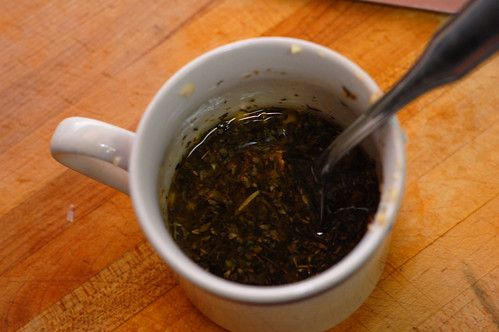
Red Wine Vinaigrette

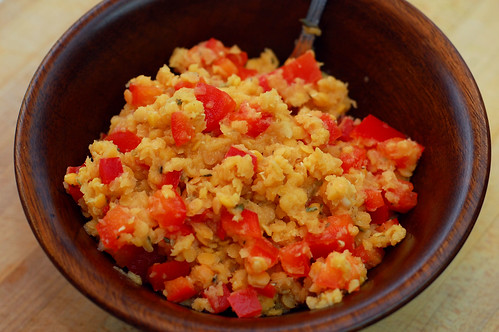
As the climate changes, so does the type of food we cook. Soup is one of the big things for winter (one of the few things I enjoy about the season) but as the weather warms, often what we eat cools. Salads are big and a salad is what I made that evening; albeit not the traditional leafy kind. This baby has red lentils as the star and I was pretty happy with the results.

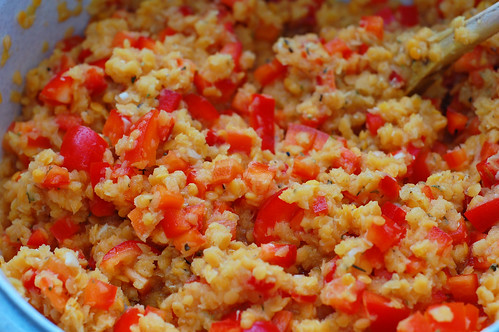
Red Lentils and Red Bell Peppers

Like the rest of the lentil family, the reds are a great source of protein. They also have a mild earthy flavor and cook in very little time. The red bell peppers add their sweet compliment and the red wine vinaigrette enhances without overpowering. Be sure to drain the lentils well, though! Otherwise you might end up with something that’s a cross between soup and salad.

Red Lentil Salad with Red Wine Vinaigrette

Red Lentil Salad with Red Wine Vinaigrette
Be sure to drain your lentils well or you will get a rather watery salad. Bleh.

3 cups dried red lentils; cooked and drained
2 red bell peppers; diced
4 garlic cloves; minced
1/3 cup red wine vinegar
1 teaspoon dried oregano
1/4 teaspoon dried thyme
1/4 teaspoon dried parsley
2 table spoons olive oil

Stir your lentils and red bell peppers in a large bowl. Combine the rest of your ingredients separately to form your vinaigrette, whisking to ensure well mixed. Pour your vinaigrette onto your lentils and bell peppers, mix well and enjoy.

More red bell peppers! Yes, the sales have still been going strong, and I’m still taking advantage. A reader recently commented about quinoa and I realized that we haven’t done any recipes with that ingredient yet. That’s a shame really, because like couscous, quinoa is food that’s great for you and easy to prepare. In addition to this, its subtle nutty flavor has potential to enhance many a dish.

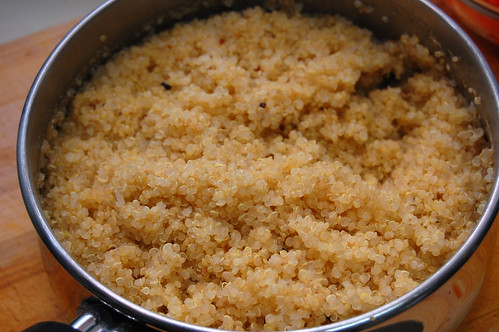
Cooked Quinoa

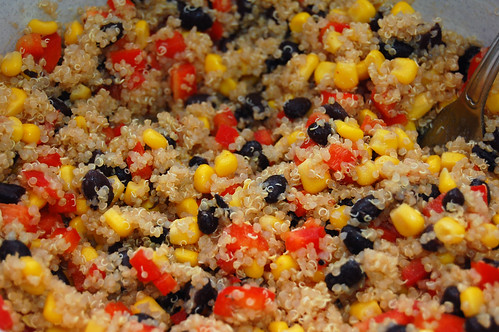
Do a search for quinoa salad with black beans and mangos and you’ll come up with more hits that you can count. I tried to go a different route. Now, I can’t say this dish is amazing or unique, but I enjoyed it. None of the flavors dominate, so it’s flavor is subtle and complex.

And yes, you can definitely use fresh corn and beans. I was feeling lazy!

Black Bean, Corn and Quinoa Salad

Black Bean, Corn and Quinoa Salad
Follow the instructions on the packaging for cooking quinoa, but often this is just simply cook one cup of uncooked quinoa in two cups of boiling water, and let simmer. One cup of uncooked quinoa yields approximately two cups cooked.

1 can black beans; rinsed and drained
1 can corn; rinsed and drained
1 red bell pepper; diced
2 cups cooked quinoa
2 tablespoons red wine vinegar
1/4 teaspoon coriander
1 teaspoon salt
4 teaspoon oil
3/4 teaspoon cumin
1/4 teaspoon cayenne pepper
4 teaspoon lime

Combine all your ingredients. That’s it! Enjoy.

All right, pop quiz: Name the first 3 three dishes that come into your head when you think “vegetarian cuisine.” Go! (No, seriously. Reader requests welcome.) For me, this list includes stuffed bell peppers; which is a bit ironic considering I’ve never actually made stuffed bell peppers. Until this week, that is.

Red Bell Pepper

I’ve had stuffed bell peppers before, but never a vegetarian one that I’ve enjoyed. Meat has a nice flavoring effect that can be difficult to compete with at times. Enter the power of spices.

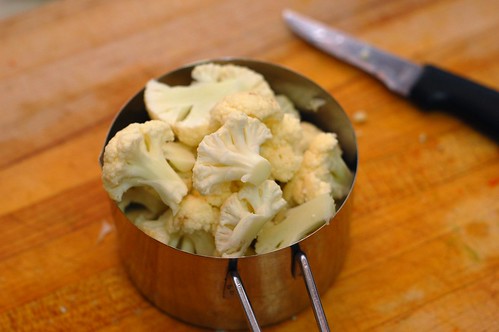
Cauliflower Chopped Small

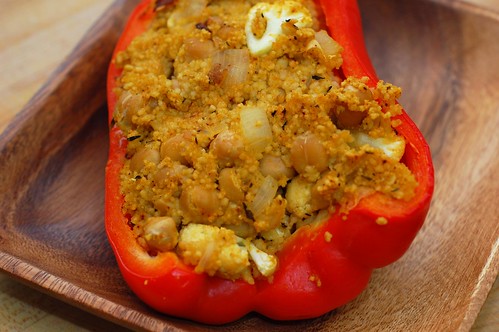
Both couscous and cauliflower have very mild flavors, so it’s up to the spices and sauted aromatics of the dish to take center stage. The chickpeas add a subtle flavor but also a nice additional texture. You can use any type of bell pepper you’d like, but I recommend a red or yellow. Their sweeter flavors really complement the curry of the filling; which fortunately isn’t lost in the roasting process.

Stuffed Red Bell Pepper with Couscous

Vegetarian Stuffed Bell Peppers with Couscous
You can use big long red bell peppers like I did, but I’d recommend the more traditional shorter fat ones if you have a choice. Of course, these have the nice advantage of becoming quasi-finger food.

2 cups cooked couscous
2 tablespoons oil
1 yellow onion; chopped
1/2 teaspoon thyme
2 garlic cloves; minced
2 cups cauliflower; chopped small (see picture)
2 cups cooked chickpeas (or one can, rinsed and drained)
3 red or yellow bell peppers
1/2 teaspoon fennel
1/8 teaspoon ancho chili powder
1/2 teaspoon sweet curry
1/2 cup stock
1/2 teaspoon salt or more to taste
freshly ground pepper to taste
3 medium sized red or yellow bell peppers

Preheat the oven to 350.

Saute the onion and thyme in oil under medium high heat until browned; approximately three minutes. Lower to medium heat and add the garlic for an additional minute; stirring frequently to prevent burning. Transfer to a medium bowl along with the remaining ingredients and mix until well combined. Add additional salt and pepper to taste.

Cut off the top half inch of your bell peppers and remove seeds and membrane. Stuff your bell peppers with your filling, placing them in a glass baking pan as you go (metal sheets would work in a pinch, but you may want to oil it first). If you have extra, just pile it on top. Place your peppers in the oven for 25-30 minutes, until everything is cooked through. Enjoy.

I should probably come as no surprise that I talk food a lot with friends. Besides the immense amount of time Heather and I go back and forth on various ideas, there are several other people with food on the brain quite often. One of my recent talks with one of these people has been about cabbage soup.

Behold the Cabbage

The only cabbage I knew of growing up was the german style red cabbage my mother would make, stinking up the entire house. Oh, how I hated it. But I want to like it. I want to start over, bury the hatchet and live in vegetable harmony. Cabbage has a few things going for it. Other than being incredibly cheap (less than a dollar a pound!), it’s a good source of dietary fiber and vitamin C. My friend was supposed to be working on her own perfect cabbage soup recipe to share (*cough*cough*), but I could wait no longer. Enjoy my cabbage soup.

Cabbage Soup

Cabbage Soup with Beans

2 tablespoons oil
1 yellow onion; chopped
2 leeks; sliced (whites only)
3 garlic cloves, minced
8 cups stock or water
2 large carrots; diced
1/2 teaspoon caraway seeds
1 teaspoon dried marjoram
1 teaspoon dried parsley
1 large white potato; chopped into quarter inch pieces
1/2 head of green cabbage; cut into 1/4 inch slices or shredded
2 cups cooked great northern beans (or one can rinsed and drained)
1 teaspoon salt

Sweat the onion, leeks and garlic cloves in the oil until soft and translucent; approximately 10 minutes. Add the stock, carrots, herbs and bring to a boil. Add the potato and simmer until slightly soft; approximately 15 minutes. Add the cabbage and simmer for an additional 15 minute; adding the beans and salt for the last five minutes.

Remove from heat and add salt and pepper to taste. Enjoy.