A Hankering For Hummus – Garlic Hummus

I had a hankering for hummus (and alliteration) the other day, which was odd considering I can count the number of times I’ve had hummus quite possibly on one hand. But hey, details; hankerings cannot be denied. It was adventure time in Chef Edwin’s kitchen.

Processing Hummus Ingredients

The great thing about hummus is that it’s incredibly easy (and therefore fun) to experiment with. Once you’ve processed your recipe base (chickpeas, tahini, oil, maybe some water), you can pretty much go wherever you want. Add a little bit of this, a dash of that, maybe some more of this… Order doesn’t really matter because it’s all being processed together. Just start small; add a bit of one or two things, taste and let your pallet tell you where to go.

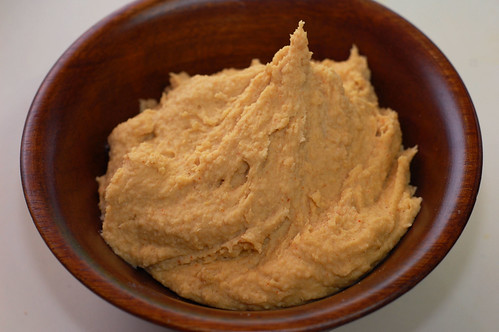
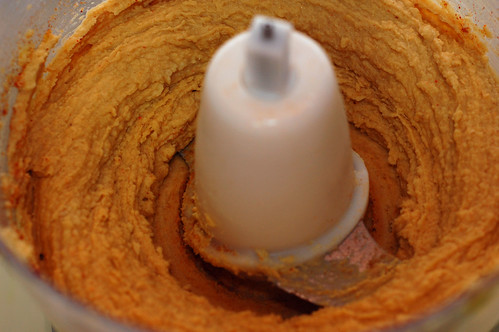
Thick Garlic Hummus

Garlic Hummus

1 head roasted garlic
2 cups cooked chickpeas
1/3 cup tahini
3 tablespoons extra virgin olive oil
3 tablespoons lemon (one lemon)
4 tablespoons water
1/2 teaspoon cumin
1/2 teaspoons coriander
1/4 teaspoons paprika
1/4 teaspoons cayenne
1 teaspoons kosher salt

Fit your food processor with the chopper blade. Throw in the garlic and process until minced. Add your remaining ingredients and continue to process. This hummus is a bit thick, so feel free to add some more oil and water, a bit at a time until it reaches your desired consistency (me, I like it thick). Enjoy.

Who Needs Scallions? Mashed Potatoes and Rutabaga

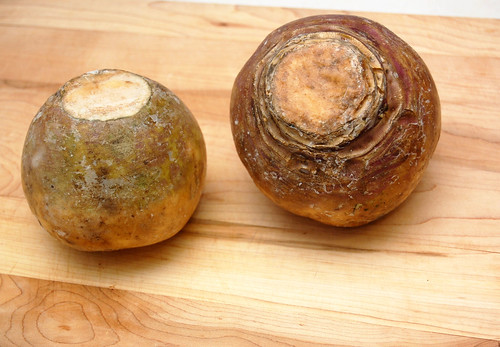
Two dinner posts in one week instead of dessert? This is Ghost Baker blasphemy! And I picked rutabaga to work with; such a bizarre looking vegetable. Maybe hitting our 100th DinnerCakes post this week has made me loopy.

rutabagas

Don’t worry, I’ve just been cooking a lot lately and trying new things… and thankfully they seem to be working out well! Weight loss and weekly baking weren’t really fitting together, though I believe Chef Edwin got a good laugh at my dreams of a pound cake diet (which he sarcastically termed my “pound diet”).

My mother-in-law got me a subscription to Food Network Magazine for Christmas which I have already toyed with before here. This was a really cool gift because now I get great, seasonal recipes delivered directly to my door (er, mail slot). Today’s recipe was inspired by the Nov/Dec 2008 issue featuring some fancy potato recipes.

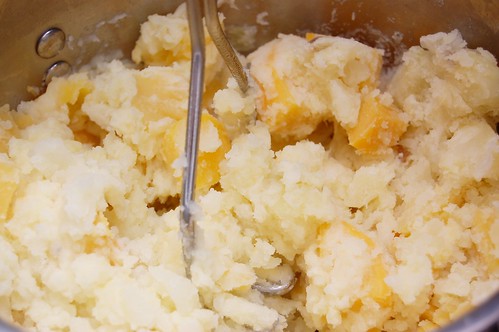
mashing

The original recipe called for a few things that I thought were a little unnecessary for my purposes (a weeknight side dish). And my husband quickly vetoed my quest for fresh parsley and scallions in the grocery store stating incredulously, “Who has ever eaten something and said it needs more scallions!?”

So here we are! I took out some of the “fluff,” used basic Russet potatoes instead of Yukon Gold and added broccoli. This recipe makes a shallow baking dish full of mashed potatoes and rutabaga. We had enough leftover for a full week of dinners and/or lunches… quite a bit, really. But I surprisingly never got tired of it! This dish really is a nice surprise. I’d only had rutabaga once before at Thanksgiving 2008. I thought it had a very distinct, almost bitter taste that didn’t agree with me, but combining it with potatoes makes it much more mild and very enjoyable.

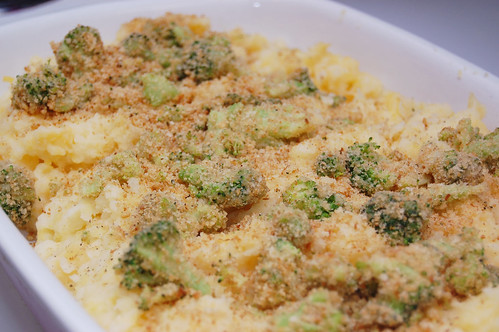
mashed potatoes and rutabaga

Mashed Potatoes and Rutabaga
adapted from Food Network Magazine

1 pound rutabaga (yellow turnip), peeled and cut into 1-inch pieces
1 pound Russet potatoes, peeled and quartered
3 tablespoons unsalted butter, room temperature
3 tablespoons margarine, room temperature (I did half regular butter and half margarine in an attempt to reduce the fat content, but you certainly don’t have to)
3/4 cup half and half, warmed
salt, to taste (I used coarse Kosher salt)
1/2 tablespoon oil (I used Smart Balance oil)
2 cups broccoli florets, chopped
3/4 cups plain breadcrumbs

In a large pot, cover cut rutabaga and potatoes with cold, salted water and bring to a boil on medium heat. Once the water begins to boil, reduce to a simmer until the vegetables are tender (they should hold there form, but there should be little resistance when pierced with a fork). This will take approximately 30 minutes.

Drain the water and turn the heat down to low. Stir in 3 tablespoons of the butter (not the margarine) and mash (I used a potato masher) until smooth (I like to leave just a few potato chunks in mine, but I know everyone has there own preference!). Add the warm half and half and salt. Keep warm on low setting.

Meanwhile, melt the remaining 3 tablespoons of margarine with the oil in a skillet on medium. Add the breadcrumbs and broccoli and cook until broccoli is tender, stirring so that the breadcrumbs don’t burn.

Pour the potato mixture into a shallow baking or casserole dish. Sprinkle potatoes with the breadcrumb/broccoli mixture and serve.

Note – after discussing this dish with Edwin, we think mashed cauliflower might also be good in here, possibly as a substitute to the Russet potatoes. Let us know if you try it out!

Food Photography: Our 100th Post!

Can you believe it? It’s already our hundredth post! Oh, how time does fly… Now, this picture may not look like much (poor lighting, bad framing, grainy, etc), but it has special significance. Back when Heather and I were just (re-)getting to know each other, we took a fondant class together at a local cooking supply store. This is my result.

The class was an… interesting experience and one that we both enjoyed. As far as I’m concerned, this is where it all began. It’s been good working with ya, Heather; and I’m sure I speak for both us when I say it’s been great writing for all you loyal readers. Happy 100th, and I hope we see you for another 100 (and beyond)!

Fondant Cake - Part of the Beginning

Stuffed Cabbage Leaves – Cooking with Winter Vegetables

My husband got me a really interesting new cookbook for Christmas called In Season: Cooking with Vegetables and Fruits by Sarah Raven. I don’t usually spend a lot of time thinking about ways to cook using vegetables that are in season; a better description of my style would be haphazard or erratic (and let’s face it, I don’t really spend a lot of time thinking about vegetables, period). But this is a beautiful book with a lot of great ideas.
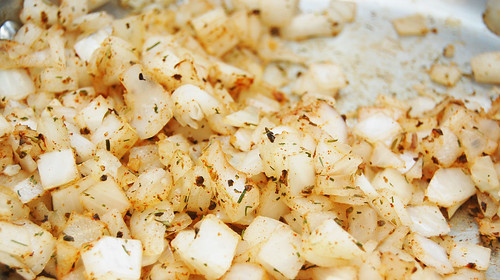
onions

For January and February cooking, the book recommends cabbages, chicories, citrus, evergreen herbs and winter salad greens. I decided to try a stuffed cabbage recipe.
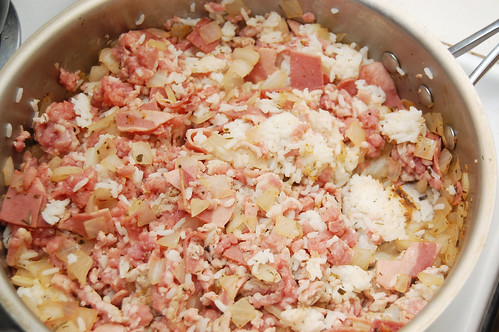
rice onions turkey bacon and pork

Back in November, Edwin posted a quasi-Indian style vegetarian cabbage roll dish. This one is pretty different from that (the original recipe author is from Hungary). The recipe in the book called for a lot of things – bacon, ground beef, chopped mixed herbs and sauerkraut. It was my goal to pare it down a bit. I also tried to make it a little healthier, eliminating the bacon for turkey bacon and holding off on the ground beef completely.

cabbage rolls

This was my first dish from this book, and I was a little disappointed at the way the instructions are written. A few of the steps seem to leave a great deal to the imagination. For example, Edwin’s cabbage recipe calls for boiling the cabbage head until the leaves begin separating. My recipe didn’t mention anything about that, and so I found it very difficult to peel off the leaves in one piece. I probably pulled off about 6 large, fat leaves and the rest were moderately ripped and shredded in the process. Hopefully it was just a fluke for this recipe.

I think this turned out well and I will likely make it again. What do you put in your cabbage rolls?
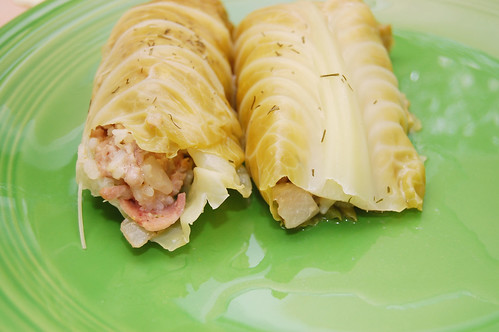
cabbage rolls ready

Stuffed Cabbage Leaves
adapted from In Season: Cooking with Vegetables and Fruits
(yields about 20 rolls, total prep and cook time is approx. 1 1/2 hours)

1 cabbage
2 bay leaves
3/4 cup (6 ounces) turkey bacon, chopped
1 onion, chopped
3 garlic cloves, minced
1 teaspoon paprika
1/4 teaspoon ground cumin
1/2 teaspoon marjoram, thyme and dill
salt and pepper (dash)
1 pound ground pork
1/2 cup cooked long-grain white rice
1 egg, beaten
1 cups chicken broth

Preheat oven to 350F.

(I’ve inserted Edwin’s instructions here for peeling the leaves so that you don’t have the same problem I did) – Core the hard part of the cabbage (the stem mostly) from the base. Boil in a large pot of boiling, salted water. In about 5-10 minutes, when the leaves begin separating, remove from the pot. Let cool.

Remove the thickest part of the cabbage leaves to make them easier to roll.

Fry the turkey bacon in a shallow pan and set aside. In the same pan, add onion, garlic, marjoram, thyme, dill, paprika, cumin, salt and pepper on low heat so as not to burn it.

In a large skillet, combine raw pork, cooked rice, cooked turkey bacon and onion mixture. Add the beaten egg to bind the mixture and season with salt and pepper. Stir occassionally until cooked.

When cooked, place approximately two spoonfuls of the mixture on a cabbage leaf. Roll the leaf, starting from the stem and and tuck in the edges. Place the rolls, seam down, in a shallow baking or casserole dish. Pour brother over the leaves and add bay leaf and a dash of dill. Cook, covered, for approximately one hour.

Khitcheri – Time For Some Detox

The problem with baking (well, ok, ONE of the problems) is leftovers; because when you have leftovers, you inevitably end up consuming them when you really should be consuming something else. Oatmeal for breakfast? Nah…

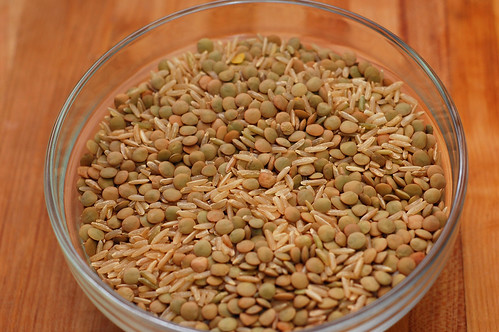
Lentils and Basmati Rice

That was the story of my Sunday after baking a coconut cake for a friend’s birthday on Saturday. It leftovers were just a little too awesome to resist so in an attempt to balance the scales (and just placate my own mental anguish) I decided on something much simpler and lighter for dinner.

Kitcheri is a simple dish, Indian in origin. It’s been attributed to having a cleansing effect on the body; something I felt I could use. Don’t expect to be bowled away by this dish. It’s flavor is mild and subtle. Enjoy it when you’re in the right mood.

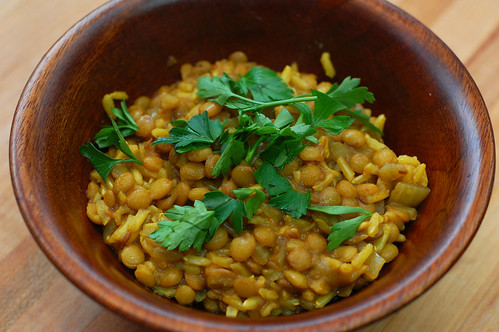
Kitcheri

Kitcheri
1 cup green lentils; rinsed
3/4 cup brown basmati rice
3 tablespoons oil
1 teaspoons cumin seeds
1 onion; chopped
2 garlic cloves; minced
1/2 teaspoon ginger; minced
2 teaspoons coriander
4 cups stock (or water)
1/2 teaspoon turmeric
salt to taste
parsley as garnish (optional)

Soak the lentils and rice for 30 minutes.

Under medium heat, roast the cumin seeds with one tablespoons of oil for 20 seconds. Add the additional oil along with the onion, garlic, ginger and coriander. Sweat for 2-3 minutes. You should smell the ginger and the onions should begin to look translucent.

Add the water, turmeric, lentils and rice. Simmer for 20-25 minutes or until the rice is soft; adding salt to taste. Let sit for 5 minutes and serve with parsley as a garnish. Enjoy