Kitchen Tips – What the heck does "picked over" mean?

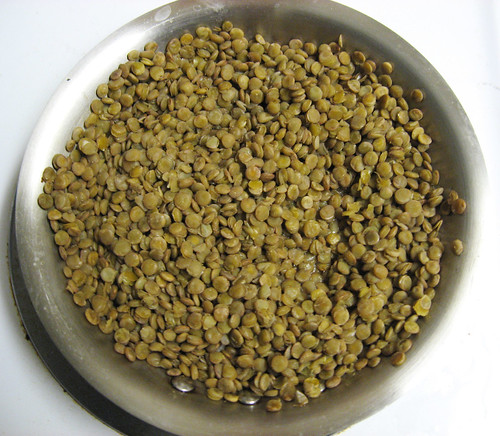
If you’re working with lentils or other beans, you may sometimes notice that the instructions say, “rinse and pick over.”

The first time I encountered this I was baffled. I thought, “What am I picking over? Is there something bad in here?” Everything looked fine to me!

lentils

Sometimes in beans or lentils you might sometimes find a few little rocks that managed to sneak their way in. I know, it sounds crazy. I’ve actually never encountered one yet; I’ll have to ask the Chef Edwin, the lentil guru himself, how frequently this occurs.

While rinsing or after rinsing, try spreading out the lentils or beans, feel them and look at them. If you see something that looks off, just throw it away. The rest of the batch should be fine. You don’t need to be nervous about it, but do take a look – just thinking about biting down on a rock makes me cringe!

Kitchen Tips: What is Roasting?

Continuing on from an earlier Kitchen Tips, today we’ll talk about roasting. Whether working with cuts of meat or vegetables the basics are the same. Roasting can considered a style of baking because, just like baking, your food is cooked by being subjected to heat on all sides from hot air.

Roasting is almost always done uncovered, in a shallow pan and with little to no water. Why? Browning. These settings allow your food to keep (relatively) dry to brown and crisp. Adding water can result in more of a steaming effect which you don’t really want.

With vegetables (and I suppose meats as well), you want to keep into consideration spacing. As your vegetables cook they will release their moisture. If you crowd your vegetables they will essentially steam/moisturize each other; giving less browning (there are some exceptions to this, but not many). The spacing depends on the situation, but I recommend starting with half an inch and exploring from there. Remember, pans are cheap, but good food is priceless!

Kitchen Tips – Beating Egg Whites

My biggest pet peeve with cookbooks is when they throw around undefined terminology, leave too much to the imagination and have no photos accompanying recipes.

If you’re relatively new to baking and a recipe advises you to beat egg whites until they’re “stiff white peaks,” you may find yourself wondering what in the world this means.

First separate the egg whites from the yolks. Let the whites get to about room temperature, or at least not quite as cold. For best results, you will need the assistance of an electric mixer or stand mixer – your arms likely don’t have the stamina!

With your electric or stand mixer, beat the egg whites on high speed with a whisk attachment for several minutes. Do not rush the process. You’ll know you have “stiff white peaks” when the egg whites resemble marshmallow fluff. Your egg whites should also triple in volume. Follow your recipe instructions when adding other ingredients such as sugar.

Patience and beating at high speed is key!

white peaks

There are days when I get home from work where all I want to do is dig into some food as quickly and simply as possible. Don’t get me wrong, I love to cook, but we all have our ‘meh’ days. On those days I just want all my ingredients at home practically ready to go. Wouldn’t it be great if you came home to find your vegetables freshly chopped?

I’m not much a fan of frozen vegetables for most dishes, but I do recognize the value of frozen meats. When you have some beef tips or chicken breasts in the fridge you’ve got a small window of availability before they begin to spoil; usually within a few days. If you freeze it, however, then your window can range from a few months to even a full year (keep in mind, after a month most begin to slowly degrade in quality). But how to get that meat ready to be cooked and in my stomach as quickly as possible?

Cooking meats before they are fully thawed can be, to quote the Joy of Cooking (also known as my culinary bible), disastrous. Not only do you run the risk supporting the growth of harmful bacteria, you will most likely end up with something that’s cooked on the outside and raw on the inside. Not exactly good eats. If you know your meat’s thaw time in the fridge and you plan ahead, no problem. But stuff happens. You run out the door on your way to work and forget to move something from the freezer to the fridge only to return in the evening, stomach growling, with a frozen block of unhappiness. Sigh…

When this happens, use a technique I picked up from an episode of Alton Brown’s Good Eats: running cold water. Put your meat in an airtight bag, place that bag in a bowl of cold water, and place that bowl under a small trickle of water in your sink. The trickle ensures the water stays cold (warm water = bacteria fun zone) while not spiking your water bill. This method is safer and faster than on your counter top.

Any questions or topics you’d like us to cover? Send us an e-mail at dinnercakes@gmail.com.

If you’ve spent some time trying to cook meals from scratch then you’ve probably across the terms sautéing and sweating. These are pretty common terms for many recipes where you simply apply combine heat, vegetables (often aromatics) and a little fat (often oil). However this deceivingly simple trifecta hides many processes that can yield wildly different results. Today we’ll focus on the two most common.

Sauté comes from the French word sauter, to jump, and it’s where you apply relatively high heat to brown the ingredients, trapping in its moisture and flavor. The goal is to preserve the uniqueness of the individual ingredient with only minimal, subtle mingling of flavors. This is often used in dishes like stir-fries or perhaps as an initial step before searing some meat. I personally love sautéd onions and peppers in my burgers (when I eat burgers, of course). The browning tends to add its own unique touch to the ingredient; enhancing it.

Sweating comes from the Italian word soffrito, underfrying, and this is done with low heat. The goal of sweating is to pull the flavor out of the vegetables so that it can influence the liquid in your dish along with the other ingredients. You will often find this done in one of my most often cooking forays: soups. Certain vegetables, like onions, will become translucent after sweating and very little browning should occur. If you see browning, it’s often a sign that your heat is too high or amount of fat is too low.

I find that some people don’t pay full attention to which one they’re doing when cooking. I strongly encourage you to take a moment next time your working with something like a mirepoix to ask yourself what the recipe is telling you to do and why it makes sense (or doesn’t) with the dish you’re making. Enjoy.

Kitchen Tips – Creaming Butter and Sugar

You know you’re obsessed with baking when you describe to a friend that watching the stages of creaming butter and sugar is a “euphoric experience.” Luckily that friend was none other than my co-blogger Chef Edwin, so he did not report me to the authorities and the men in white coats never came to get.

From very early in my baking career I began seeing the phrases “cream butter,” “cream butter and sugars,” or “cream until light and fluffy.” Of course, I had no idea what this meant, and I heard a variety of explanations when I asked others.

creaming2

The best and clearest step by step explanation that I’ve found was in my frequently raved about favorite cake book CakeLove: How to Bake Cakes from Scratch by Warren Brown (thank you again for the wonderful gift, Lisa!). Warren Brown is also a bit of a personal hero to me because he went to law school, became a lawyer, realized he didn’t enjoy it and left to open a bakery! He writes:

“For a while before I started baking, I didn’t recognize the disconnect between my daily conscious self and the voice of discontent in my head. I acted happy but I was really torn. I don’t know when this started but the conflict seemed normal. I just figured I’d deal with it like everyone else who was moping about in their late twenties: bury it, ignore it, or wait for something to change. But settling started to take a toll. I felt like a bobbing mooring, not going under but also not going anywhere. Even though I knew that I wanted out of practicing law, I didn’t know what I should do instead or how to get there. To figure it out I tried looking at my future retrospectively, picturing myself twenty years in the future. I envisioned two possible paths: work hard for twenty years and develop an expertise in law, then pursue the dreams that were already building in my head; or skip the middle-aged agony and get on with my pent-up passions right away. I chose the latter because my gut said, “Who are you kidding – avoid the midlife crisis you can predict! Start baking!”

If that’s not a battle cry, I don’t know what is. I withdrew from law school in 2006 after realizing very early on that law school and I were incompatible in every way. It was one of the best decisions I’ve made. I have not opened a bakery (yet?), but clearly I have great respect and admiration for Warren Brown (Mr. Brown, if you need a new spokesperson, please contact me).

But back to creaming – creaming aerates your cake batter and adds bubbles to it, making it light and fluffy instead of dense or tough. It also allows your cake to rise and develop a great texture.

poundcake

The absolute best way to do it is to combine room temperature (not microwaved) butter with your sugar(s) in a stand mixer on the lowest speed using the paddle attachment (not whisk). If you don’t have a stand mixer but you see a good deal of baking in your future, then consider giving the economy a little boost and investing in one. I use it constantly.

Do not rush the creaming process. As the sugar pushes through the butter you’ll see the volume slightly increase as the mixture becomes fluffy, light yellow and a little grainy. Creaming should take at least 3 minutes; do not turn up the speed on the mixer any higher than low. If you don’t have a stand mixer, do your best with electric beaters. You really can’t get the same effect trying to do this by hand. Also, creaming is not a concern for brownies or cookies.

When done properly, as I said above, watching the butter and sugar push and pull and become fluffy is so satisfying! You will make some truly mouth-watering cakes. And if at first you don’t succeed – keep plugging away!

Kitchen Tips: What are Complete Proteins?

As someone who eats a largely vegetarian diet, there are a few nutritional concerns it’s important to be aware of. One of these is the topic of complete proteins. I’ve never really liked the term because it’s not used to describe an actual protein (or collection of proteins). A complete protein is a source of protein that contains an adequate amount of the essential amino acids for our dietary needs. Essential amino acids are ones our body can’t create on its own, and there are generally eight or nine of them, depending on who you ask. You need these things for your health so it’s important to eat a diet that supplies them for you.

For omnivores out there, this really isn’t a problem. Just about all animal proteins are considered complete proteins (meat, fish, poultry, milk, cheese, eggs). If you’re a vegetarian, however, then you may not be be getting all you need from your daily milk, cheese and egg intake (I know I’m not). Most beans, grains and nuts are not complete proteins. Fortunately, you take just about any from one category and combine it with another and you’ve got a complete protein. Bean soup with rice, chili with corn bread…. voila! Whole protein.

So, if you’re a meat eater, rest easy knowing you’re probably doing ok. If you’re more of a vegetarian like me, then just think about how you’re eating from these three categories.

Kitchen Tips: How to Avoid Burning Your Garlic

Gather around children, it’s time for this weeks installment of Kitchen Tips.

Garlic, while an excellent aromatic, burns very easily; and when it burns it becomes very bitter. While there may be dishes that call for a very bitter flavor, many don’t and you burn your garlic, you’re done. Game over. That bitter is not going away.

So when you’re cooking with something on a wok with very few ingredients to absorb the heat (like my Baby Bok Choy recipe), start with a cold wok and cold oil. This heat up process will infuse the oil with all that garlicky goodness without burning. If you’re cooking with other aromatics like onion, consider adding your garlic with the other vegetables or the protein.

Kitchen Tips – Graham Cracker/Cookie Crusts

Kitchen tips is a brand new type of DINNERCAKES post where we’ll share some of the things we’ve learned and continue to learn along the way. Hopefully we’ll make all the mistakes so that you don’t have to!

Cookie Crumbs - NOT finely ground

When making a graham cracker or cookie crust for a pie or bar cookie, I’ve found it’s best to buy a box or bag of pre-ground crumbs whenever possible:

  • finely ground crumbs combine easily with the melted butter
  • the crumbs press into a pie plate smoothly
  • the crust holds together better in the plate
  • it’s easier to cut into for serving (because it’s less thick)

Even if you use a meat tenderizer or rolling pin it’s unlikely that you’ll be able to get a truly fine consistency throughout, but you’ll put in twice the work. Sometimes I still make my own crumbs for fun and so that everything is from scratch, but then I quickly remember it’s not that fun at all (and that my idea of fun is clearly a little off)!

Note: The oreo cookie crumb photo shows crumbs that are NOT finely ground. I was lazy here, and my pie crust suffered for it!